How Ball Sports Transformed My Body Maintenance Game
Ever wondered why playing ball sports feels like a full-body tune-up? I used to think cardio and weights were enough—until I started regularly playing basketball and tennis. Within weeks, my posture improved, joint stiffness faded, and my energy soared. It wasn’t just exercise; it was movement therapy. Turns out, the dynamic twists, stops, and coordination in ball sports do more for long-term body maintenance than most realize. This is what science—and my body—have taught me.
The Hidden Power of Ball Sports in Daily Body Maintenance
Ball sports are often celebrated for their cardiovascular benefits and calorie burn, but their true value lies deeper—in their ability to serve as a comprehensive system for daily body maintenance. Unlike isolated gym routines that target specific muscle groups, ball games engage the body in integrated, functional movement patterns. These patterns mirror the natural demands of everyday life: reaching, turning, stepping, pivoting, and reacting. When you play basketball, tennis, or even casual soccer with family, your body is not simply working harder—it’s working smarter. The unpredictable nature of the ball’s trajectory forces constant micro-adjustments in posture, balance, and muscle activation, creating a full-body neuromuscular workout that traditional exercises rarely replicate.
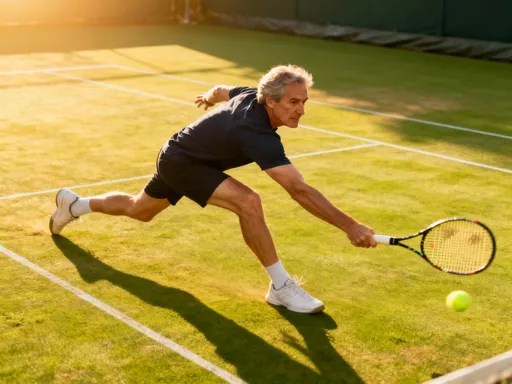
What sets ball sports apart is their demand for multiplanar motion. Most gym exercises occur in a single plane—forward and back, or up and down—but real-life movement happens in all three planes: sagittal (forward-backward), frontal (side-to-side), and transverse (rotational). Ball sports inherently require all three. A tennis player lunges forward to reach a drop shot (sagittal), sidesteps to cover the baseline (frontal), and rotates powerfully through the torso to serve (transverse). This three-dimensional engagement strengthens muscles, tendons, and ligaments in balanced proportions, reducing the risk of overuse injuries and muscular imbalances. Over time, this leads to improved joint stability and more fluid, efficient movement.
Additionally, the cognitive-motor connection in ball sports enhances body awareness. Tracking a fast-moving object improves visual processing and reaction time, while the need to anticipate an opponent’s move sharpens decision-making under pressure. These skills translate beyond the court—they help you navigate crowded sidewalks, catch a falling object, or steady yourself on uneven ground. In essence, ball sports train not just the body but the mind-body connection, making them a uniquely holistic form of physical maintenance that supports long-term health and independence.
Why Modern Lifestyles Demand Dynamic Movement
Modern life is built around stillness. Many adults spend hours each day seated—at desks, in cars, on couches—leading to what health experts call “sitting disease.” Prolonged sitting shortens hip flexors, weakens glutes, and places sustained pressure on the spine, contributing to chronic lower back pain, poor circulation, and reduced mobility. The human body was designed for varied movement, not static postures, and when it doesn’t receive that stimulus, systems begin to deteriorate. Muscle atrophy, joint stiffness, and diminished proprioception—the body’s sense of its position in space—become common, especially after age 40. These changes may seem minor at first, but they accumulate, increasing the risk of falls, injuries, and long-term disability.
Ball sports act as a powerful antidote to sedentary living. They reintroduce dynamic, whole-body movement in a way that feels engaging rather than punitive. A single game of doubles tennis involves hundreds of directional changes, quick accelerations, and controlled decelerations—each one activating deep stabilizing muscles that sit idle during desk work. Jumping for a rebound in basketball engages the entire kinetic chain, from feet to core to shoulders, reawakening muscle fibers that have grown dormant. Even a casual game of catch in the backyard prompts shoulder mobility, core engagement, and eye-hand coordination, all of which counteract the physical stagnation of modern routines.
Moreover, the playful nature of ball games makes them sustainable. Unlike rigid workout regimens that can feel like chores, sports offer built-in motivation through competition, teamwork, and enjoyment. This emotional engagement increases adherence, making it more likely that individuals will stick with the activity long-term. For women in their 30s to 50s, who often juggle work, family, and household responsibilities, finding time for self-care can be challenging. Ball sports offer a rare win-win: they provide essential physical benefits while also serving as social and mental refreshment. In this way, they are not just corrective but preventive—helping to maintain function before decline sets in.
Joint Health: How Ball Sports Support Long-Term Mobility
Joint health is a cornerstone of lifelong mobility, and ball sports play a crucial role in preserving it. Unlike high-impact activities such as long-distance running, which can place repetitive stress on joints, most ball sports involve varied, low-impact movements that actually nourish joint structures. One of the key mechanisms is the circulation of synovial fluid—the lubricating liquid within joints that delivers nutrients to cartilage and removes waste. Cartilage has no direct blood supply, so it relies on movement to stay healthy. The stop-start, twist-and-turn nature of games like pickleball, badminton, or volleyball creates a pumping action that enhances synovial fluid flow, keeping joints well-lubricated and reducing friction.
Controlled lateral movements, common in tennis and basketball, strengthen the ligaments and tendons surrounding the knees and ankles. These connective tissues act as stabilizers, and when they are conditioned through sport-specific motions, they become more resilient to strain. For example, a tennis player’s side shuffle strengthens the medial and lateral aspects of the knee, improving joint integrity without excessive load. Over time, this can delay the onset of osteoarthritis, a degenerative condition that affects millions of adults, particularly women after menopause when joint lubrication naturally decreases.
Additionally, the varied range of motion in ball sports helps maintain joint flexibility. A soccer player’s kick involves full hip extension and flexion, while a volleyball spike requires shoulder abduction and rotation. These movements prevent the stiffness that comes from repetitive, limited-motion activities. Research in movement science supports the idea that “use it or lose it” applies directly to joint health. Joints that are regularly taken through their full range of motion retain better function and are less prone to pain and degeneration. By incorporating ball sports into a weekly routine, individuals can actively protect their joints, ensuring greater comfort and independence in later years.
Core Stability and Posture—Without Crunches
The core is often misunderstood as just the abdominal muscles, but it is actually a complex system of muscles that includes the transverse abdominis, obliques, pelvic floor, diaphragm, and lower back. Its primary function is stabilization, not movement. Traditional ab exercises like crunches isolate the rectus abdominis—the “six-pack” muscle—but do little to train the core’s true role in maintaining spinal alignment and transferring force between upper and lower body. Ball sports, on the other hand, demand real-time core engagement in response to dynamic challenges. Whether you’re pivoting to return a tennis ball or bracing to absorb contact in basketball, your core automatically activates to protect your spine and maintain balance.
This functional core training leads to measurable improvements in posture. Slouching, forward head posture, and lower back sway—common issues among desk workers—are often the result of weak or poorly coordinated core muscles. When the deep stabilizers are underused, the body compensates by overworking other muscles, leading to tension and pain. Regular participation in ball sports retrains these patterns. The rotational forces in a golf swing or a handball throw, for instance, require the obliques and transverse abdominis to contract in coordination with the hips and shoulders. Over time, this builds a stronger, more integrated core that supports the spine in all positions—sitting, standing, and moving.
Many women report a reduction in lower back pain after incorporating ball sports into their routine. This is not coincidental. A strong, responsive core reduces the load on the lumbar spine, minimizing strain during everyday activities like lifting groceries or bending to tie shoes. Unlike static core exercises, ball sports train the muscles to respond instinctively to sudden shifts in balance, making them more effective for real-world stability. The result is not just a flatter stomach, but a more resilient, pain-free body that moves with greater ease and confidence.
Balance, Coordination, and Injury Prevention
As we age, maintaining balance and coordination becomes increasingly important for safety and independence. Falls are a leading cause of injury among adults over 50, often resulting in fractures, reduced mobility, and loss of confidence. Ball sports offer a natural, enjoyable way to enhance neuromuscular control—the brain’s ability to coordinate muscle activity in response to sensory input. Tracking a moving ball sharpens visual tracking and reaction time, while jumping, landing, and changing direction teach proper biomechanics. These skills are not just athletic—they are essential for navigating daily life with agility and confidence.
Consider the act of catching a ball. It requires hand-eye coordination, depth perception, and precise timing—all of which decline with age if not practiced. Similarly, landing from a jump in volleyball trains the body to absorb impact safely, engaging the quadriceps, hamstrings, and glutes in a controlled manner. This reduces the risk of knee injuries and improves shock absorption throughout the lower body. Over time, the nervous system becomes more efficient at recruiting the right muscles at the right time, leading to smoother, more stable movement.
Studies in motor learning have shown that varied, unpredictable movement environments—like those found in ball sports—are more effective for improving balance than repetitive exercises such as standing on one leg. The brain adapts to complexity, and the constant need to adjust to a moving target keeps the nervous system sharp. For women managing busy households, this means greater confidence in multitasking while moving—carrying a child while stepping over a toy, for example, or reaching for a high shelf without losing balance. By enhancing coordination and reducing fall risk, ball sports contribute directly to long-term safety and quality of life.
Recovery and Regeneration Through Play
Many people believe that effective exercise must be intense and exhausting, but this mindset can lead to burnout and overuse injuries. The truth is, recovery is just as important as exertion when it comes to body maintenance. Ball sports, particularly at a moderate intensity, serve as an excellent form of active recovery. They increase blood flow to muscles without the high mechanical stress of heavy lifting or long runs. This enhanced circulation delivers oxygen and nutrients to fatigued tissues, speeds up the removal of metabolic waste, and reduces muscle soreness. Unlike passive rest, active recovery keeps the body moving, preventing stiffness and promoting faster healing.
Additionally, the enjoyment factor of ball sports lowers stress hormones like cortisol. Chronic stress contributes to inflammation, poor sleep, and muscle tension—all of which hinder recovery. When exercise feels like play, the body responds differently. Endorphins and other mood-boosting chemicals are released, improving emotional well-being and supporting restorative sleep. For women navigating the demands of family and work, this mental reset is invaluable. A weekend game of doubles tennis or a friendly soccer match with neighbors can be as restorative as a spa day—only with lasting physical benefits.
Furthermore, the social nature of team and partner sports enhances motivation and accountability. Knowing that others are counting on you to show up increases the likelihood of consistency. This social support network also buffers against stress, further promoting recovery. When movement is embedded in connection and joy, it becomes sustainable. Over time, this creates a positive feedback loop: better recovery leads to more energy, which leads to more activity, which leads to better health. Ball sports, therefore, are not just about physical output—they are about holistic regeneration.
Building a Sustainable Routine: Making Ball Sports a Lifestyle
The key to lasting body maintenance is consistency, not intensity. The most effective health strategies are those that can be maintained for years, not just weeks. Ball sports offer a rare combination of physical benefit and emotional reward, making them one of the most sustainable forms of exercise. The challenge for many adults, especially women with busy schedules, is finding the time and confidence to start. The solution is not to aim for perfection, but to begin small. Joining a casual recreational league, playing doubles instead of singles, or practicing solo drills in the backyard can all be effective entry points.
It’s important to prioritize enjoyment over performance. The goal is not to win every game, but to move regularly in a way that feels good. For beginners, starting with lower-impact options like pickleball, bocce, or light basketball shooting can build confidence and fitness gradually. Wearing supportive footwear, warming up properly, and staying hydrated are simple steps that reduce injury risk and enhance comfort. As skills improve, so does motivation—creating a self-reinforcing cycle of engagement.
Family involvement can also make ball sports more accessible. Playing catch with children, organizing a weekend badminton game in the park, or joining a community walking soccer group turns exercise into quality time. This integration of movement into social and family life removes the “chore” factor and makes physical activity a natural part of daily rhythm. Over time, the benefits compound: better posture, stronger joints, improved balance, and higher energy levels become the norm. Ultimately, the most powerful health strategy is one that doesn’t feel like a strategy at all—just living well, one playful movement at a time.